Chow Kit:
most improved,
still the roughest street.
Chow Kit is where Kuala Lumpur has changed most in five years and where it has changed least on one particular street, and you need both halves of that. The upside: boutique rooms at RM220–360 in restored shophouses, the best neighbourhood-scale eating in the central city, and a wet market that travellers rank among the very best in Asia — free, enormous, and the single most underrated thing in Kuala Lumpur. Add Kin Kin at 40 Jalan Dewan Sultan Sulaiman 1, 07:00–19:00, RM10.50–12, where chilli pan mee was invented in the 1980s. The downside is specific rather than general: Jalan Haji Taib remains the roughest street in the tourist-adjacent city and you should simply not walk it, particularly after dark. Second-time visitors should be here. First-timers on three nights probably should not.
Who should stay in Chow Kit, and who should not
Stay here on a second trip, or a first trip if you already know you prefer neighbourhoods to districts. Do not stay here if this is your first night in Asia or if the phrase “up-and-coming” makes you nervous — both reactions are reasonable.
The value story is the one nobody writes. A wave of restored shophouse conversions has put genuinely good design hotels into Chow Kit at RM220–360 — rooms that would cost double in Bukit Bintang and triple in KLCC, ten minutes by monorail from both. You are paying a location discount for a reputation the district has mostly outgrown, and that gap is the most exploitable thing on this site.
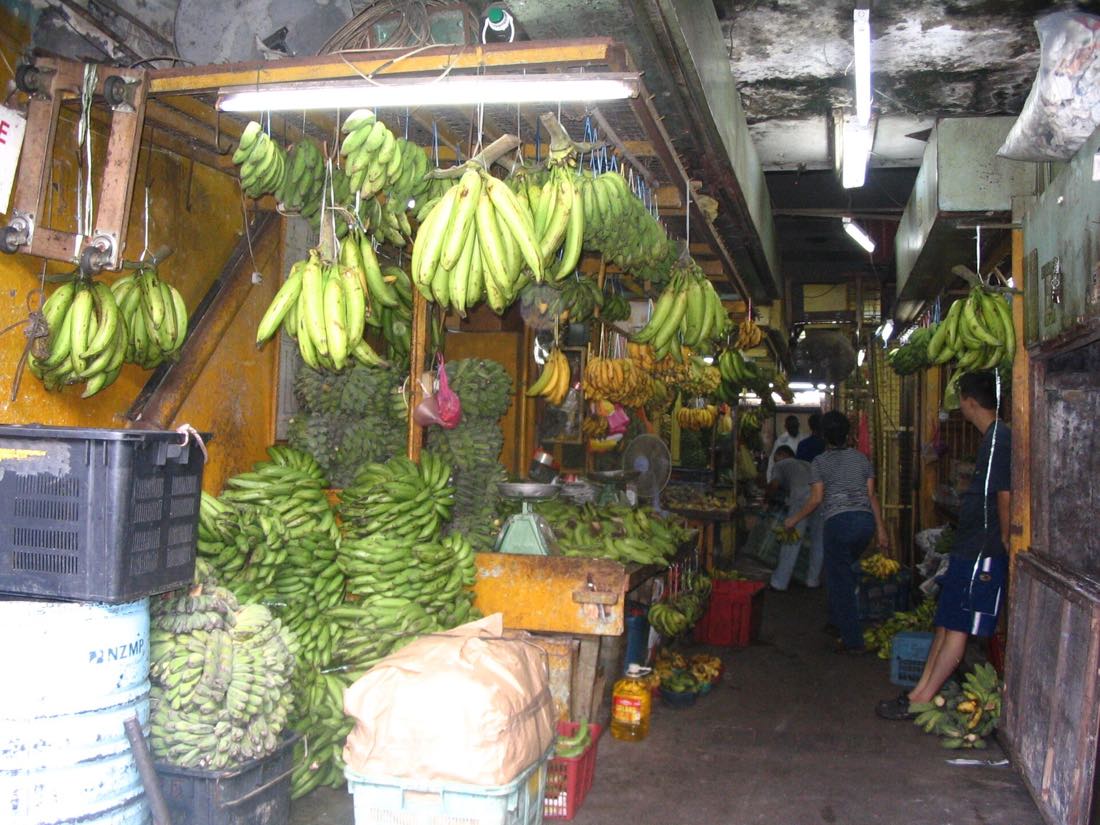
The reason to be here rather than anywhere else is the wet market. Chow Kit’s market is the largest in central Kuala Lumpur and travellers who have been to a lot of markets describe it as one of the very best in Asia: whole aisles of fish on ice, butchers, jungle vegetables, dried goods, banana leaves, and a food section at the back where the traders eat. It costs nothing, it is at its full intensity by 07:00, and it is largely done by early afternoon. Go early, go hungry, and do not photograph a stallholder without asking.
The food outside the market is the other reason. Kin Kin, at 40 Jalan Dewan Sultan Sulaiman 1, is where chilli pan mee was invented in the 1980s — hand-torn noodles, a poached egg, anchovies and a jar of dried chilli you mix in yourself, RM10.50–12, open 07:00–19:00. It is one of the ten dishes worth planning a day around in this city, and it is a two-minute walk from rooms that cost RM250.
Now the honest half. Chow Kit spent decades as Kuala Lumpur’s red-light and drug district, and that history has not evaporated so much as concentrated. Jalan Haji Taib is where it concentrated. It is the roughest street in the tourist-adjacent city, it is visibly so, and the correct response is to route around it rather than to test it — this is not a bravery question, it is a street-selection question. The rest of the district, including the market, the monorail corridor and the shophouse hotels, is unremarkable in the way ordinary city neighbourhoods are unremarkable.
Chow Kit, ranked
Chow Kit wet market
Travellers who have worked their way across Asia put this in the top tier of markets on the continent, and it is free. Fish, butchery, jungle vegetables, dried goods and a traders’ food section at the back. Arrive at 07:00, leave by 10:00, and treat it as a functioning workplace rather than a photo set.
Kin Kin chilli pan mee
The dish was invented at this address in the 1980s and every version you have eaten elsewhere is downstream of it. Hand-torn noodles, poached egg, crisp anchovies, and a jar of dried chilli you add yourself — start with less than you think. Under RM12, cash, no ceremony.
The shophouse hotels
The value story nobody writes about. Restored pre-war shophouses converted into small design hotels at a price that would buy you a business room next to a mall elsewhere in the city. Ten minutes by monorail from Bukit Bintang, and a genuine neighbourhood outside the door.
Jalan Masjid India, ten minutes south
The Indian-Muslim shopping street between Chow Kit and Merdeka Square — textiles, prayer goods, mamak stalls and a covered bazaar. It is the natural walking companion to Chow Kit and the two together make a better morning than either alone.
Kampung Baru, next door
The Malay village is immediately east, which means a Chow Kit base puts Nasi Lemak Wanjo at 8 Jalan Raja Muda Musa — 06:00 to midnight, RM10–15 — inside walking distance. Two of KL’s ten defining dishes are within a fifteen-minute walk of each other from here.
Jalan Haji Taib
The single street where Chow Kit’s old reputation is still accurate, and the only place on this site we tell you to avoid by name. There is nothing there you need. Check the street name on your hotel’s address before you book, and walk the parallel roads.
When to be at Chow Kit market
Wet markets are a morning format everywhere and this one is no exception. The difference between 07:00 and 13:00 here is the difference between the best free thing in Kuala Lumpur and a wet floor.
Peak, and the hour to be here. Everything trading, every aisle running, the food section at the back full.
Chow Kit, practically
Where to stay in Chow Kit
Check the street name on the listing before you check the photographs. That single step is the whole risk-management strategy for this district, and it takes ten seconds.
Chow Kit FAQ
Is Chow Kit safe for tourists?
The district is broadly fine in daylight and the monorail corridor and market area are unremarkable. The specific exception is Jalan Haji Taib, which remains the roughest street in the tourist-adjacent city and should be routed around day and night. Check your hotel’s street name before booking. See our safety page for the wider picture.
Is Chow Kit market worth visiting?
It is the single most underrated free thing in Kuala Lumpur. Travellers who have been to markets across Asia rank it among the very best on the continent — a full wet market with fish, butchery, jungle vegetables and a traders’ food section. Go at 07:00; by 11:00 it is finished.
Where was chilli pan mee invented?
At Kin Kin, 40 Jalan Dewan Sultan Sulaiman 1 in Chow Kit, in the 1980s. It is still there, open 07:00–19:00, at RM10.50–12 a bowl: hand-torn noodles, poached egg, anchovies and a jar of dried chilli you mix in yourself. Every version elsewhere descends from this one.
Is Chow Kit a good place to stay in Kuala Lumpur?
For a second trip, yes — restored shophouse hotels at RM220–360 are the best design-per-ringgit in the city, ten minutes by monorail from Bukit Bintang, with the market and Kin Kin on the doorstep. For a first trip of three nights, Bukit Bintang or Chinatown are safer choices.
How do I get to Chow Kit?
KL Monorail to Chow Kit or Medan Tuanku — the same line that serves Bukit Bintang and KL Sentral, about ten minutes from Bukit Bintang. From KLCC, walk the Saloma Link to Kampung Baru and continue west on foot, roughly 25 minutes in total.
What should I avoid in Chow Kit?
Jalan Haji Taib specifically, day and night. Beyond that, avoid arriving at the market after 10:00 and expecting anything, and avoid photographing traders without asking — this is a workplace, not an attraction, and the goodwill runs out fast.
What else is near Chow Kit?
Kampung Baru is a fifteen-minute walk east, which puts Nasi Lemak Wanjo (06:00–24:00, RM10–15) inside range. Jalan Masjid India is ten minutes south. Between the three you have two of Kuala Lumpur’s ten defining dishes and one of its best markets within a mile.