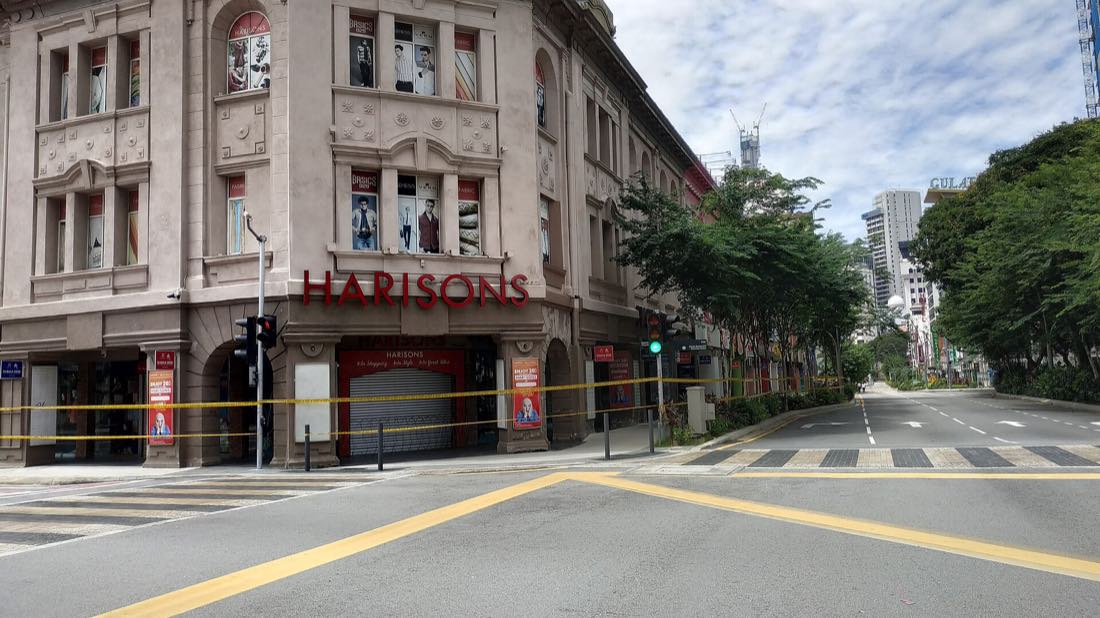
Is Kuala Lumpur boring?
Or are you doing it wrong?
This is the single most common thing said about Kuala Lumpur, and most travel sites either ignore it or argue with it. We think it deserves a straight answer, because the complaint is real, it is specific, and it is almost always a scheduling error rather than a judgement about the city.
The complaint is real and it is almost always a scheduling error. Kuala Lumpur was rebuilt through the 1980s and 90s around the private car and the air-conditioned mall. It is around 32°C every day with a storm most afternoons between 16:00 and 18:00. So its social life happens indoors, after dark, or both. A visitor walking between daytime sights at 14:00 in 90% humidity has genuinely found a boring city — and a resident who eats at 22:00 and argues at a mamak at 02:00 cannot understand what they are talking about. Both are describing the same place. Only one of them found it. The fix is not a longer list of attractions. It is a different clock, plus four specific corrections set out below.
Why the city looks empty in the afternoon
Three facts about Kuala Lumpur, taken together, explain nearly every disappointed review it receives. None of them are about whether the city has anything to offer.
One: it was built for cars, not for walking. KL was largely remade in the 1980s and 90s around private vehicles and air-conditioned interiors. The pedestrian layer was an afterthought and still looks like one — broken pavements, missing crossings, footbridges that dead-end at a wall, and streets designed to be driven along rather than walked down. A European or Japanese city rewards aimless walking. This one punishes it.
Two: it is 32°C every day, with 80–90% humidity. Not seasonally — always. There is no cooler month to visit. Between roughly 11:00 and 16:00, walking outdoors is not pleasant, and no amount of enthusiasm changes that. Every local has already solved this: they are inside.
Three: it storms most afternoons between 16:00 and 18:00, hardest in April–May and October–November, usually clearing by 19:00–20:00. That removes the late afternoon from the outdoor schedule entirely on most days of the year.
Put those three together and the result is structural: public life in Kuala Lumpur happens indoors, after dark, or both. The malls are not the destination, they are the shelter. The night markets, the mamaks, the kopitiams, the food streets and the bars are where the city actually is, and every one of them peaks after 20:00. A visitor who does daylight sightseeing and is back at the hotel by 21:30 has spent their entire trip in the hours the city is asleep.
That is why the two most common sentences about KL are both true and completely incompatible. “There is nothing to do here” is what you get from 09:00–18:00 on foot in the wrong districts. “Where do I even start” is what you get from 19:00–02:00. Same city, different eight hours.
The schedule that fixes it
You do not need a different list of attractions. You need to move the same list onto the clock the city actually runs on. There are three blocks and all of them matter.
The early block: 07:00–11:00. This is the good outdoor time and almost no visitor uses it. Batu Caves at 07:30, with the steps in shade and the coaches still an hour away, for RM2.60 each way. Chow Kit market at 08:00. Thean Hou Temple at 09:00, empty. KL Tower's Sky Deck at 09:00, before the haze. A hill walk at Taman Tugu. By 11:00 you should be finishing, not starting.
The indoor block: 12:00–18:00. Long, unhurried, and deliberately good rather than a fallback. The Islamic Arts Museum at RM20 fills three hours of it. A two-hour kopitiam lunch. The Royal Selangor workshop. REXKL. GMBB. The 1.17km covered walkway between Bukit Bintang and KLCC means you can cross the visitor core in a downpour without getting wet. Our rainy day page is really the midday page.
The night block: 19:00 onwards, and it does not end at 22:00. Fountains at 19:30. Food from 19:30 — and eat at 21:00, not 19:00, because 19:00 is when Kuala Lumpur is still working. Bars at 22:00. A pasar malam at midnight. And the roti canai and teh tarik at a mamak at 02:00, about RM5, which is not a novelty but the actual centre of social life here. The hour-by-hour version is on Kuala Lumpur at night.
Run those three blocks for three days and the boring-city question stops being askable. Run daylight sightseeing for two days and it answers itself in the other direction.
What people who found KL boring actually did
Every disappointed account of Kuala Lumpur we have read makes at least two of these four errors, and usually three. They are all cheap to fix.
| The mistake | Why it fails here | The fix |
|---|---|---|
| Staying only in Bukit Bintang and KLCC | These are the two most commercial districts in the city and the least representative of it. KLCC is beautiful and effectively dead by 22:00, when the malls shut. Bukit Bintang is loud but is largely a strip of malls and tourist food | Sleep there if you like, but spend your evenings in Kampung Baru, Chinatown and Pudu. They are 10–20 minutes away and they are where the city lives |
| Eating dinner at 19:00, Western-style | At 19:00 Kuala Lumpur is still commuting. Hawker streets fill from 19:30, mamaks run all night, and the good tables at 21:00 are the ones that were empty two hours earlier. An early dinner means you see the city setting up rather than running | Eat at 21:00. Then eat again at 02:00 — roti canai and teh tarik for about RM5. That second meal is the one people remember |
| Treating malls as the destination | Suria KLCC and Pavilion are excellent malls and completely interchangeable with malls anywhere. If a mall is on your itinerary as an activity, the itinerary has a hole in it where the afternoon storm should be | Use malls as shelter and transit — the covered walkway between Bukit Bintang and KLCC is genuinely useful. Put the museum, a workshop or a kopitiam in that slot instead |
| Giving the city 48 hours of daylight instead of 72 of the right hours | Two days almost guarantees two blocks of daytime sightseeing and no nights, which is precisely the schedule that produces “there is nothing to do here” | Three days, using early mornings, indoor middays and long nights. The plan is on our 3-day itinerary |
There is a fifth, less common one: assuming the rankings are a to-do list. TripAdvisor sorts by popularity, which is how three shopping malls outrank the best museum in the country. Our ranked list sorts by what you get back instead.
When the answer really is yes
We are not going to pretend this works for everybody. There are travellers for whom Kuala Lumpur will be a dull few days no matter how well it is scheduled, and it is more useful to say so.
If what you want from a city is walking — long, aimless, street-level wandering as the main activity — KL will frustrate you. The pedestrian layer is genuinely poor, the heat compresses your range, and the interesting fragments are separated by arterial roads. Penang, Melaka and Hanoi all do that better, and it is not close.
If you want dense historic fabric, this is not the place either. Kuala Lumpur was a tin-mining settlement in 1857 and a modern capital by 1970; the colonial core around Merdeka Square is one very good hour, not three days. Melaka is the day trip that fills that gap.
If you do not drink and do not particularly care about food, you have removed the two things the night runs on, and the case gets thin. And if you are travelling with someone who cannot manage heat, humidity or uneven pavements, the correct schedule becomes much harder to run.
For everyone else the verdict holds: KL is not boring, it is nocturnal and indoor, and the complaint is a scheduling artefact. The wider argument, with the arrivals data and the counter-case, is on is Kuala Lumpur worth visiting.
The two things that reliably turn the trip around
If you have one evening to change your mind about Kuala Lumpur, spend it on food with someone who knows the hours — and sleep somewhere that is awake when you get back.
Is Kuala Lumpur boring FAQ
Is Kuala Lumpur boring?
It depends entirely on when you look at it. Between 11:00 and 16:00, in 32°C and 90% humidity, walking between sights, it genuinely is. Between 19:00 and 02:00 it is one of the best eating cities in the world. The complaint is a scheduling artefact, not a description of the city.
Why do people say there is nothing to do in Kuala Lumpur?
Because they gave it two days of daylight. KL was rebuilt around the car and the air-conditioned mall, it storms most afternoons between 16:00 and 18:00, and its social life is nocturnal — so a visitor doing daytime sightseeing on a European clock misses almost all of it.
Is 2 days enough for Kuala Lumpur?
Two days is exactly the number that produces the bad reviews, because a 48-hour visitor rarely uses the nights. Three days lets you run early mornings, indoor middays and long evenings, which is the schedule the city is actually built for. See our 3-day itinerary.
What do locals do in Kuala Lumpur at night?
Eat, mostly, and late. Hawker streets from 19:30, night markets to around midnight, and mamak restaurants 24 hours — roti canai and teh tarik at 02:00 for about RM5 is the genuine centre of social life here, not a novelty. The full plan is on KL at night.
Is Kuala Lumpur just shopping malls?
The malls are real and there are a lot of them, but they function as shelter from 32°C heat and a 16:00 storm rather than as destinations. The city is in Kampung Baru, the Chinatown lorongs, Chow Kit market, Pudu and the hills — none of which are air-conditioned, and all of which are best outside the middle of the day.
Is Kuala Lumpur better than Penang or Melaka?
For walking and historic fabric, no — Penang and Melaka both beat it comfortably, and Melaka is an easy day trip from KL by bus from TBS from RM12. For food range, rail, value and nightlife, Kuala Lumpur wins. They answer different questions and it is worth being honest about which one you are asking.
What is the biggest mistake visitors make in Kuala Lumpur?
Eating dinner at 19:00 and going back to the hotel at 21:30. At 19:00 the city is still commuting; at 21:00 the food streets are full and at 02:00 the mamaks are the busiest rooms in town. Shift dinner two hours later and most of the boring-city problem disappears.