Is Petaling Street
worth it?
The covered market on Jalan Petaling scores 3.6 out of 5 across 11,733 TripAdvisor reviews — the largest pool of disappointment in Kuala Lumpur. Two minutes away, in the lanes nobody puts on a list, is the best free hour in the old city. This page separates them.
The green-roofed stretch of Jalan Petaling that every itinerary calls “Chinatown” is a counterfeit-handbag market with a 3.6 out of 5 rating across 11,733 TripAdvisor reviews, which is the largest concentration of disappointed visitors in Kuala Lumpur. Fake goods, aggressive pitching, prices quoted at four times what anyone pays, and almost nothing to eat that you could not eat better elsewhere. Skip it. Then walk two minutes and do the thing nobody writes about: the lorongs. Kwai Chai Hong, Lorong Panggung, REXKL, Sin Sze Si Ya — a network of restored back-lanes, murals, coffee bars and a temple from 1864, all free, all within four hundred metres of the market you just walked past. Central Market, the other default recommendation, scores 3.9 and is also lukewarm. The lanes are the answer.
Why the covered market fails
It is not that Petaling Street is a tourist trap — most good markets are. It is that this one has stopped selling anything you would want, and 11,733 reviewers have said so at an average of 3.6 out of 5.
The goods are counterfeit and everybody knows it. The covered section is handbags, watches, sunglasses and football shirts with borrowed logos, sold by pitch rather than display. Opening prices routinely run three to four times what the stall will actually accept, which means every transaction is a negotiation you did not ask for, conducted in a hot covered lane at walking pace.
The pitching is the real complaint. Read the reviews and the pattern is consistent: it is not the fakes that people object to, it is being called at continuously for four hundred metres. If you enjoy that, the market is fine. Most visitors do not, and after twenty minutes they leave with nothing and a slightly worse impression of a genuinely good city.
The food is not the reason to be here either. There is food on Jalan Petaling and some of it is decent, but everything worth queueing for in this quarter is on the side streets rather than under the green roof — Madras Lane, Jalan Hang Lekir, Jalan Sultan. Our ten dishes page puts the addresses in order.
Central Market gets the same treatment and it should. It sits at 3.9 out of 5, marginally better than the market, and it is a clean, air-conditioned, thoroughly commercialised craft hall. It is a reasonable rain shelter and a reasonable place to buy a batik gift in twenty minutes. It is not a morning, and it is not culture — see our rainy-day page for better indoor options at the same distance.
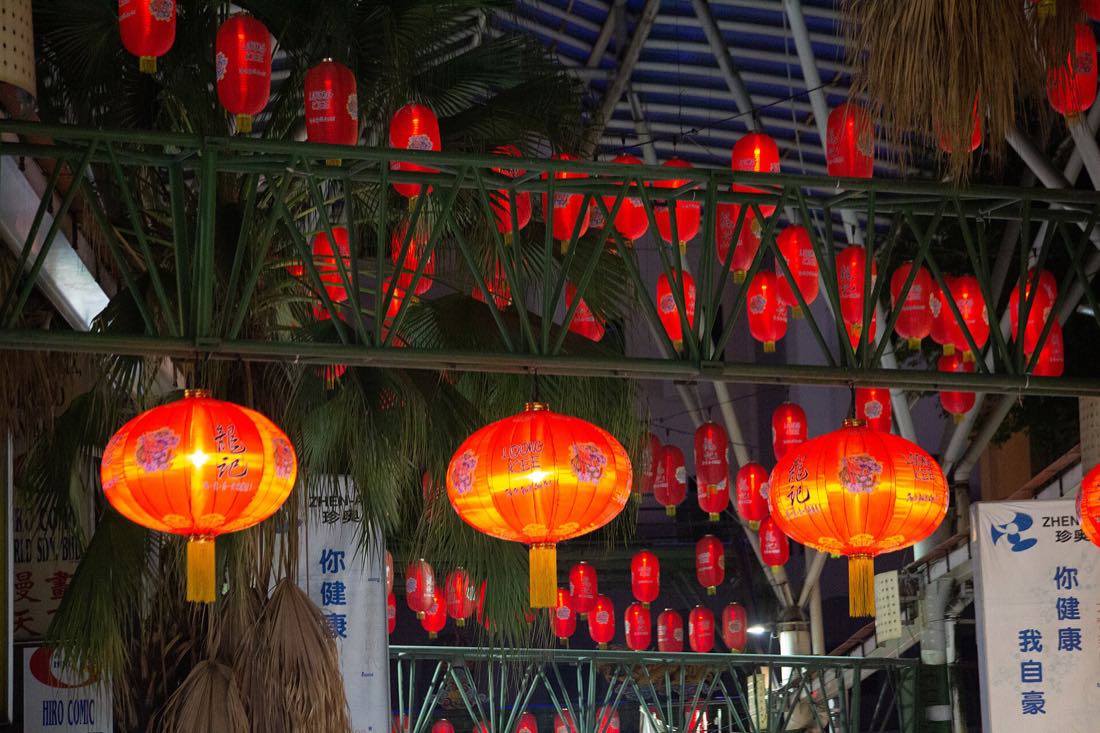
One honest caveat: at night, with the lanterns on, the market street photographs well, and if you are staying in Chinatown — which we recommend as the best-value base in the city — you will walk through it anyway. Walk through it. Just do not plan an afternoon around it.
What Chinatown actually is now
The two hundred metres either side of Jalan Petaling have been quietly transformed over the last few years, and none of it has reached the itineraries. This is the fastest-improving quarter in Kuala Lumpur and it is almost entirely free.
The change has a shape: old shophouse lanes that were service alleys have been restored as public space, with murals, independent coffee, small bars and galleries in the upper floors. It happened alongside the Merdeka 118 tower going up ten minutes away and the MRT Putrajaya line putting a station underneath it, and together those things have pulled the centre of gravity of Kuala Lumpur back south for the first time in twenty years.
What that means practically is that the best free hour in the old city is a loop rather than a street. Start at Kwai Chai Hong, cut through Lorong Panggung, come out at REXKL, and finish at Sin Sze Si Ya — Kuala Lumpur's oldest temple, founded in 1864 by Yap Ah Loy, the Kapitan China who effectively built the city. Total distance: about four hundred metres. Total cost: nothing.
Then eat, because this is where the quarter genuinely beats everywhere else in the city. Madras Lane, off 69 Jalan Petaling, does the best curry laksa in Kuala Lumpur from 07:30 to 11:30, closed Sunday and Monday. Kim Lian Kee at 42/92 Jalan Hang Lekir has been making KL Hokkien mee at that address since 1927 — the only dish on our top ten that was invented in this city — and runs 18:00 to midnight at around RM18.
So the honest itinerary for “Chinatown” is: curry laksa at 08:00, the lorongs at 09:00, out before the covered market opens properly, and back at 18:00 for Hokkien mee. The market is a thing you walk past twice. Our full Chinatown page has the whole quarter, including where to stay in it.
Six things within four hundred metres
Kwai Chai Hong — the restored lane that started it
A short back-lane off Lorong Panggung restored with murals depicting 1960s Chinatown life, a red bridge over the culvert, and coffee and cocktail bars in the shophouses either side. It is the single most photographed place in the quarter and it costs nothing. Best in the hour after opening or after dark, when the lanterns are lit.
Lorong Panggung and the shophouse lanes
The lane behind Jalan Sultan, lined with pre-war shophouses that now hold coffee roasters, small bars and design shops in their ground floors. This is what people mean when they say Chinatown has changed, and it is two minutes from the covered market that has not.
REXKL — a 1940s cinema turned into a book city
A burnt-out art deco cinema on Jalan Sultan rebuilt as a cultural space: a second-hand bookshop stacked into a full-height scaffold, food stalls, exhibitions and events. Free to walk into, air-conditioned in parts, and one of the better answers when the 16:00 storm lands.
Sin Sze Si Ya Temple — Kuala Lumpur's oldest, 1864
Founded by Yap Ah Loy, the Kapitan China who rebuilt Kuala Lumpur after the civil war and is as close to a founder as this city has. It is small, dark, working and free, sits at an angle to the street grid for geomantic reasons, and is fifty metres from the covered market almost nobody walks into it from.
Madras Lane curry laksa — the best bowl in the city
Off 69 Jalan Petaling, in an alley of hawker stalls behind the market. Curry laksa is one of the ten dishes Kuala Lumpur is actually built on and this is where to eat it. Open 07:30 to 11:30 and closed Sunday and Monday, which means the visitors who arrive at noon on a weekend never find out it exists.
Kim Lian Kee Hokkien mee — same address since 1927
42/92 Jalan Hang Lekir. KL Hokkien mee — thick noodles in dark soy with pork lard — is the only dish on our top-ten list that was invented in Kuala Lumpur, and it was invented here, at this address, in 1927. Around RM18 a plate, evenings only, and worth building your night around.
Is Petaling Street for you?
Petaling Street, practically
The one thing worth booking in Chinatown
Nothing here needs a ticket. What is genuinely worth money in this quarter is a food guide, because the good stalls keep short hours, close on days nobody expects, and are not on the street the tourists walk down.
Petaling Street FAQ
Is Petaling Street worth visiting?
The covered market is not — it scores 3.6 out of 5 across 11,733 TripAdvisor reviews, the largest pool of disappointment in Kuala Lumpur, and it sells counterfeit goods by aggressive pitch. The lanes around it are excellent and free. Give the market twenty minutes on your way through and spend the time in the lorongs instead.
Is everything at Petaling Street fake?
Most of the branded goods under the green roof are counterfeit and nobody pretends otherwise. Opening prices typically run three to four times what a stall will accept, so every purchase is a negotiation. If you want something real to take home, the pewter at Royal Selangor is made in Kuala Lumpur and the visitor centre is free.
What should I do in Chinatown instead of the market?
Walk the lorongs: Kwai Chai Hong for the murals, Lorong Panggung for the shophouse bars, REXKL for the cinema-turned-book-city, and Sin Sze Si Ya — the city's oldest temple, founded 1864 — fifty metres from the market. All free, all within four hundred metres.
Where is the best food near Petaling Street?
Madras Lane, off 69 Jalan Petaling, for curry laksa — 07:30 to 11:30, closed Sunday and Monday. Kim Lian Kee at 42/92 Jalan Hang Lekir for KL Hokkien mee, 18:00 to midnight, around RM18, at that address since 1927. Neither is under the green roof.
Is Central Market better than Petaling Street?
Marginally — 3.9 out of 5 against 3.6 — and it is air-conditioned and less relentless, which counts for something at 32°C. It is still a commercialised craft hall rather than a market. Twenty minutes for a gift, not an afternoon.
What time does Petaling Street open?
The covered market builds through the afternoon and is at full stretch in the evening, with the lanterns on. The genuinely good things around it run on completely different clocks — curry laksa from 07:30, Hokkien mee from 18:00 — which is why the quarter rewards two short visits rather than one long one.
How do I get to Petaling Street?
MRT Kajang line or LRT Kelana Jaya line to Pasar Seni, then two minutes east on foot. It is also a ten-minute walk from Merdeka 118 and about the same from Merdeka Square, which makes the whole old city walkable in one loop.
Is Petaling Street safe at night?
Yes, in the ordinary sense — it is busy, lit and policed, and violent crime is not the issue here. Pickpocketing in a dense crowd is the realistic risk, as it would be in any packed market. The scams to actually know about are on our scams page.