Five days in Kuala Lumpur.
Day five is the point.
Almost nobody gives Kuala Lumpur five days, which is why almost nobody writes about the version of the city that only appears on day five — the markets at 07:00, the Indian quarter, the Bangsar dinner, the parts with no ticket counter anywhere. Days one to three are the flagship itinerary. Four and five are where it stops being a stopover.
Kuala Lumpur runs on a clock, not a map. Outdoors between 07:00 and 11:00, indoors from 11:00 to 16:00, inside something with a roof for the 16:00–18:00 storm window, and out again from 19:00, when the city finally becomes itself and stays that way until 02:00. Every itinerary on this site is built on that shape. Ignore it and you will write the review that says KL is boring. Run days one to three exactly as the flagship 3-day itinerary: old core, new core, then Ipoh by ETS train. Day four is a choice — Melaka (bus from TBS from RM12, about 2 hours) or a full nature day at the FRIM Forest SkyWalk (RM5, closed Fridays, booking required, 50 people per day). Day five is the local city and it is the day people write home about: ICC Pudu at 07:00 — closed Mondays, Chow Kit market, Brickfields, and dinner in Bangsar.
Why the fifth day is the one that changes your mind
Days one to three of any Kuala Lumpur itinerary are a list of sights. Day five is a list of neighbourhoods, and that is a different city.
Every three-day trip here visits the same eight places, and they are the right eight. But they are also, without exception, places with a ticket counter, a coach bay or a TripAdvisor ranking. The Kuala Lumpur that people who live here would defend is somewhere else entirely: it is ICC Pudu at 07:30 with 200 hawker stalls under one roof, it is Chow Kit’s wet market at 08:00, it is banana leaf rice at a Bib Gourmand in Brickfields for RM8.50, and it is a bar in Bangsar that is not trying to be in anybody’s top 50.
There is a deadline on this, and it is the most consequential negative trend in the city. The defining hawker stalls are run by people in their 60s and 70s, and the succession problem has two escape valves — franchising and premium repositioning — which both preserve the dish and lose the stall. The version of day five below is not going to be available forever in this form.
The practical case is simpler. Five days lets you leave the city twice without rushing either departure, and it lets you take one full day at a walking pace, which in a city that is 32°C by 10:00 is the only way to see the parts that are not air-conditioned. Rooms are also the cheapest big-city luxury in Asia — about 4,600 new rooms are landing 2026–28, roughly 60% of them luxury, on a 70,000-room base — so the marginal cost of two more nights here is lower than almost anywhere you could compare it to.
Kuala Lumpur is around 32°C every day of the year and it storms most afternoons between 16:00 and 18:00, hardest in April–May and October–November. Front-load anything outdoors before 11:00 and keep an indoor fallback for 16:00 — that single habit fixes most bad days here.
The first 72 hours, in one paragraph each
These are unchanged from the flagship itinerary — follow it hour by hour there, and use this as the summary.
Day one — the old core. Merdeka Square at 08:00, Masjid Jamek and the river confluence, the Chinatown lorongs and Kwai Chai Hong at 10:00, Merdeka 118 from the ground at Stadium Merdeka, a free museum through the storm window, then the Saloma Link at sunset and dinner in Kampung Baru. Petaling Street is skipped on purpose — 3.6 out of 5 across 11,733 reviews.
Day two — the new core. First KTM Komuter to Batu Caves (RM2.60 each way, Temple Cave free, 07:00–21:00), the Islamic Arts Museum at RM20, Royal Selangor free with a free shuttle, indoors for the 16:00 storm, then one paid view at the last slot before sunset — Petronas RM98 or KL Tower RM140, not both — and the KLCC fountains at 20:30.
Day three — out by train. The ETS to Ipoh: 2h20 each way, first train 05:10, last back 20:26, roughly RM25–45 per leg. White coffee, the cave temples, Concubine Lane, bean sprout chicken. DIY beats every tour on this one and it is not close.
Melaka or a full day in the forest
Melaka by bus
Bus from TBS from RM12, about two hours each way. Jonker Street, the Dutch Square, the river cruise and Peranakan food. The weekday-weekend split does all the work here: Friday to Sunday go under your own steam and stay for the Jonker night market; midweek take the shared tour at around US$32 (4.8 stars from 2,726 reviews), because the night market is not running anyway and the tour saves you the bus station. Full verdict →
Check Melaka tours ↗FRIM and a nature day
The famous FRIM canopy walkway has been permanently closed since 30 June 2017. What replaced it is the ticketed Forest SkyWalk: RM5 for a foreign adult, closed Fridays, booking required, and capped at 50 people per day. That cap is the whole story — it is cheap, quiet and genuinely good, and you cannot turn up on spec. Pair it with Kanching Waterfall (RM1 plus RM2 parking) to make a full day of it. Full verdict →
Waterfall and wildlife day ↗The local city — Pudu, Chow Kit, Brickfields, Bangsar
Breakfast at ICC Pudu — closed Mondays
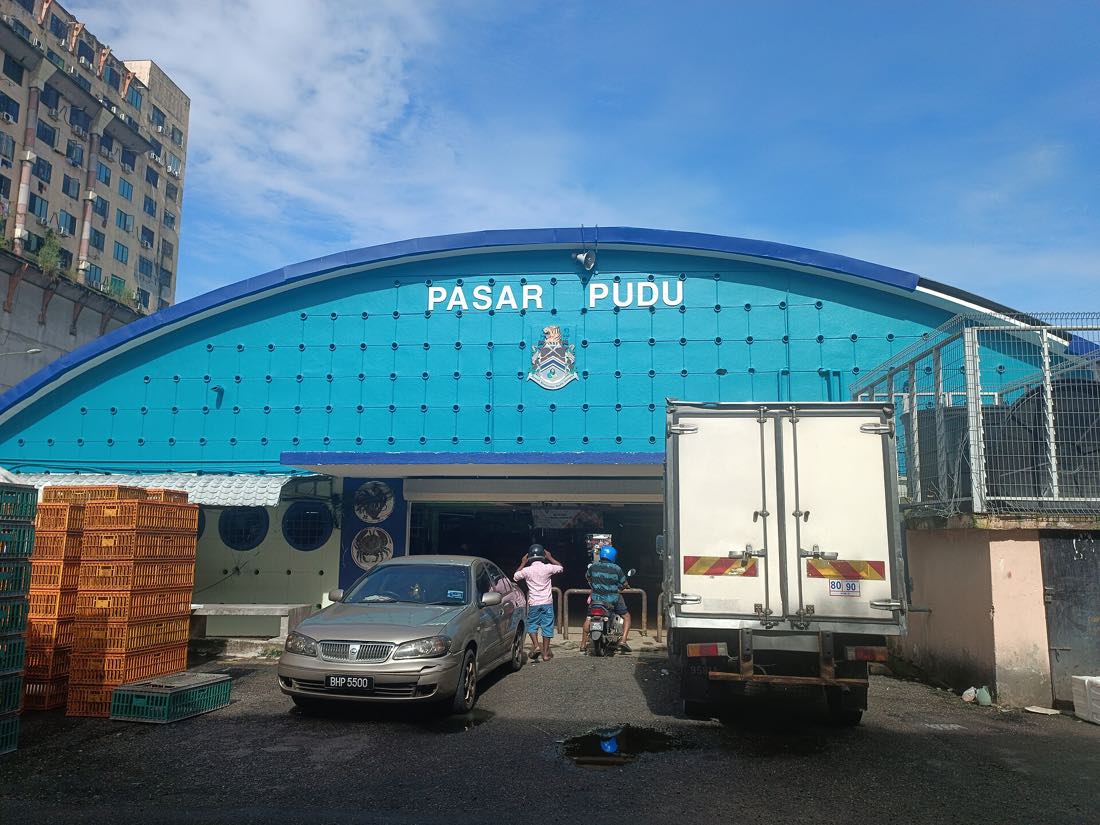
ICC Pudu / Imbi Market, Jalan 1/77C, Pudu, 07:00–10:00, closed Mondays. This is the best breakfast in Kuala Lumpur and it is a converted multi-storey building full of hawker stalls that most visitors never hear of. Go at 07:30, eat two or three small things, drink kopi. The whole meal is under RM20 and you will be finished before the heat arrives — which is exactly what the 07:00–11:00 block is for.
Chow Kit market — the wet market, properly
Monorail or a short Grab north. Chow Kit is the biggest wet market in the city and it is at its best before 10:00 — fish, herbs, jackfruit, and none of it staged for anybody. It is also where Kin Kin, 40 Jalan Dewan Sultan Sulaiman 1, 07:00–19:00, serves the chilli pan mee that spawned a hundred imitations, at RM10.50–12. One caution: avoid Jalan Haji Taib specifically, day or night.
Thean Hou Temple — free, 09:00–18:00
A six-tiered Chinese temple on a hill south of the centre, free and open 09:00–18:00, with the best long view over the city that does not cost RM98. Go now rather than later: it is exposed, and by 14:00 the terraces are radiating heat. Details on the Thean Hou page.
Brickfields — banana leaf rice for RM8.50
KTM or LRT to KL Sentral and walk into Little India. Sri Nirwana Maju, 43 Jalan Telawi 3 is the Bangsar branch; in Brickfields the banana leaf houses run all along Jalan Tun Sambanthan and a full plate is around RM8.50–12, refills included, eaten with your right hand. This is the best-value proper meal in Kuala Lumpur and it is a five-minute walk from the main train station.
The storm block — a mall you will not resent
Nobody wants to spend a fifth afternoon in a shopping centre, so pick one with a reason: GMBB for independent Malaysian design, Ilham Gallery for free contemporary art, or the National Textile Museum if you skipped it on day one. All three are indoors, none of them costs much, and the 16:00–18:00 rain will pass over you unnoticed. More on the rainy-day page.
Dinner in Bangsar
Bangsar is where Kuala Lumpur eats when it is not performing for anyone. Sri Nirwana Maju, 43 Jalan Telawi 3, about RM8.50 is a Bib Gourmand and still costs less than a coffee at the airport. Around it sits the densest cluster of good mid-price restaurants in the city. LRT Kelana Jaya line to Bangsar, then a short Grab up the hill — the walk is one of the ones with no pavement.
Last night — the bar, or the 2am mamak
If you are drinking, know what it costs: excise rose 10% on 1 November 2025 to RM192.50 per litre of pure alcohol, tax is 40–60% of retail, a pint is RM22–35 and a cocktail at a ranked bar is RM45–90. Three X Co (#32) and Bar Trigona (#38) are the only Malaysian entries in Asia’s 50 Best Bars 2026. The alternative costs RM5 and is arguably the more Malaysian ending. See bars and nightlife.
What five days actually needs booked
Three of these have hard capacity limits and one does not — which is the entire difference between planning this trip and improvising it.
Five days in Kuala Lumpur FAQ
Is 5 days too long in Kuala Lumpur?
No, and the fifth day is the one that changes people’s opinion of the city. Days one to three cover the sights, day four gets you to Melaka or the forest, and day five is markets and neighbourhoods — Pudu at 07:00, Chow Kit, Brickfields, Bangsar — which is the Kuala Lumpur that has no ticket counter.
Should I do Melaka or Ipoh from Kuala Lumpur?
Both, if you have five days: Ipoh on day three by ETS train and Melaka on day four by bus. If you can only do one, Ipoh wins — 2h20 each way by train against about two hours each way by road, and a town that is far better to walk around. The ranking is on our day trips page.
What is ICC Pudu and why is it on day five?
It is the hawker market at Jalan 1/77C in Pudu, open 07:00–10:00 and closed on Mondays, and it is the best breakfast in Kuala Lumpur. It is on day five because it needs a 07:00 start you will not manage on your first morning, and because it makes more sense once you have seen what the tourist-facing version of KL food looks like.
Is the FRIM canopy walkway open?
No. The original canopy walkway has been permanently closed since 30 June 2017. It was replaced by the ticketed Forest SkyWalk — RM5 for a foreign adult, closed on Fridays, booking required, and capped at 50 people a day. That cap is strict, so book rather than turning up.
How much do 5 days in Kuala Lumpur cost?
Around RM640 per person before accommodation: the three-day core at about RM390, roughly RM120 for a Melaka day or RM40 for the FRIM day, and about RM130 of food and transport on day five. Add rooms from RM60 a night for a capsule to RM780 for five-star. Run your own numbers on what KL costs.
Where should I stay for five nights?
Split it if you like moving, or stay put in Chinatown if you do not. Chinatown is the best-value quarter and the fastest-improving; Chow Kit boutique rooms at RM220–360 are the value story nobody writes about; Bangsar South or Sentul make sense for a longer stay. Full breakdown on where to stay.
What should I avoid on a longer KL trip?
Hiring a car — foreigners pay RM3.62–3.82 a litre for fuel against RM1.99 for MyKad holders under BUDI95, and parking in the centre is worse than the fuel. Also skip Zoo Negara at RM93 for a foreign adult, the outlet malls, and any food tour sold around Bukit Bintang, which covers the two most compromised food areas in the city.